





Eye For Film >> Movies >> Lost Land (2025) Film Review


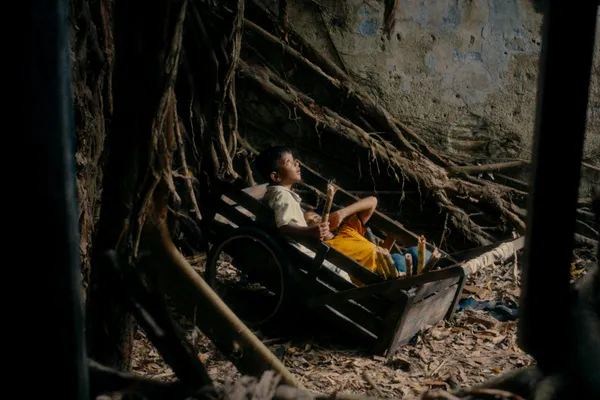

Those who read nothing about Lost Land before entering the cinema might be forgiven for thinking that they are watching a refugee documentary rather than a fiction feature for the first 15 minutes or so, such is its level of naturalism. Japanese director Akio Fujimoto’s deeply moving feature saw him collaborate with members of the Rohingya community in order to bring to life this consideration of the persecution the minority Muslim population face in their Myanmar homeland and the perilous journeys many are forced to make as refugees in search of a better life.
Life is a key word, as his drama – the first fiction film in the Rohingya language – throbs with the lived experience of those involved, with some 200 Rohingya working on it. The handheld camera employed by cinematographer Yoshio Kitagawa (Evil Does Not Exist) brings us close to nine-year-old Somira (Shomira Rias Uddin Muhammad) and her four-year-old brother Shafi (Shofik Rias Uddin) and largely maintains their perspective throughout. The choice of child protagonists not only adds to Lost Land’s emotional heft but also brings home the extra level of uncertainty and confusion felt by youngsters across the globe forced to make these sorts of dangerous odysseys in hope of safe haven. We, like them, are caught between a foggy past and an unknown future, meaning that we feel the weight of every step they take on the way. Parents will also be ensuring children memorise their telephone number after watching this.
Somira and Shafi are about to leave a refugee camp in Bangladesh with their aunt and grandfather in a bid to reach other family members in the comparatively safe haven of Malaysia. The people-traffickers they are trusting to help them make the trip immediately confiscate their mobile phones before packing them onto a boat. The harsh reality of the situation is made clear but Fujimoto steers clear of melodramatics, the children’s slide into listless silence as the days aboard pass a stronger indicator of the situation than any sort of direct brutality. Death is also presented in matter-of-fact fashion, the suddenness with which it can occur and how quickly those involved must move on is as shocking as any dramatically staged demise.
After the boat journey doesn’t go as planned, we continue to follow Somira and Shafi as they find themselves facing a series of perilous moments, and are increasingly on their own. Fujimoto has a light touch and an eye for the more lyrical experiences of childhood that don’t disappear when times are difficult. The sheer pleasure of a freshly picked lychee feels and the children’s care for one another feel all the more intense in view of their wider plight, a relationship sweetly realised by the young cast members, who are brother and sister in real life. The importance of religion to the children is also made clear without being laboured. Fujimoto’s clear-sighted approach means that every encounter, good or bad, feels plausible and poignant.
Reviewed on: 17 Sep 2025


